A while back, I wrote about what AI is quietly doing to our brains — the MIT study showing weaker neural engagement in people who lean on tools like ChatGPT to write and think for them. But knowing the danger in the abstract is different from knowing where you personally stand. So I put together this checklist. Not to shame anyone, but to offer a mirror. Ask yourself these questions honestly, and see where you land.
Start with reading. When was the last time you finished a full article or book chapter without skimming, without asking an AI to summarize it first? Can you recall, without looking, the actual argument a piece of writing made, in your own words, not a bullet-point summary someone else generated for you?
Move to writing. When you need to send an email, a message, or a piece of work, do you draft your own first attempt before ever opening an AI tool, or does the blank page itself feel unbearable now? Can you write a few honest paragraphs about something you believe in without any assistance, start to finish?
Then there’s problem-solving. If you hit a question or a task at work, is your first instinct to think it through, or to type it into a chat box? When was the last time you sat with a hard question for more than a minute before reaching for your phone?
Consider memory and retention too. Can you recall details from something you read or wrote last week without pulling it back up? Do you find yourself forgetting conversations, decisions, or ideas faster than you used to?
And finally, curiosity itself. Do you still catch yourself wondering about something just for the sake of wondering, with no task attached to it? Or does every question that crosses your mind immediately get typed into a search bar or an AI chat before you even sit with it yourself?
The Questions
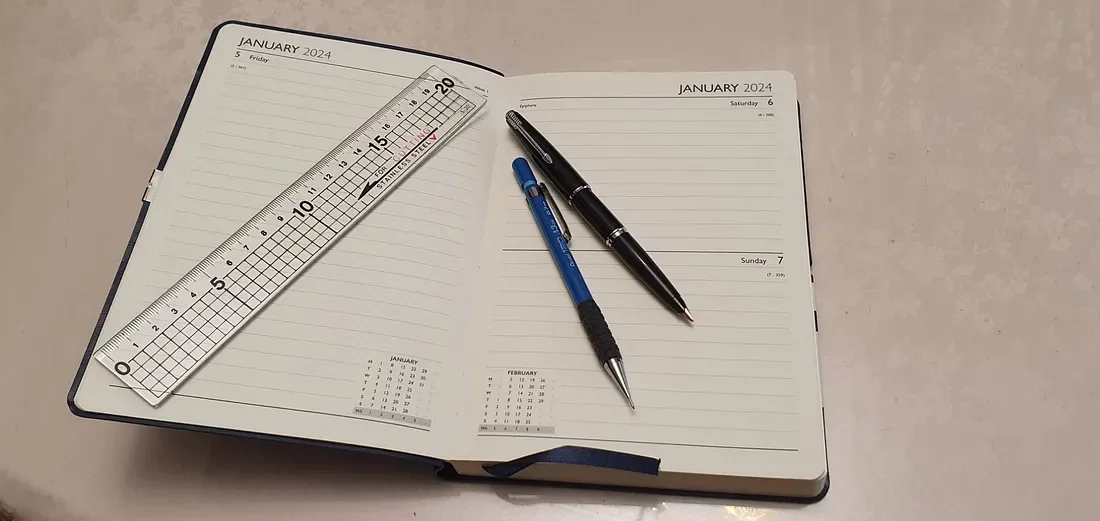
These are open-ended questions, so there’s no right or wrong answer, only your honest one. Grab a piece of paper and a pen. If you don’t have paper handy, copy these questions into a Word document or a Google doc, download it, and print it out. Then turn off your notifications, step away from your computer, and answer them somewhere quiet, just you and the page. Resist the urge to look anything up or lean on AI. Even if your handwriting is messy or you’ve never done this before, that’s not a problem. The point is to get off the screen and have a one-on-one session with yourself, so be critical, honest, authentic, and objective with the results.
They run from the easiest to sit with to the ones that might sting a little more.
- What’s the last thing you read in full, without skimming or asking anything to summarize it for you, and how did it make you feel?
- When you write something, do you usually start with your own words first, or does the blank page feel too uncomfortable to face alone?
- Think of a conversation or an idea from last week. Can you describe it in detail right now, without checking your phone?
- When was the last time you got curious about something just for the sake of it, with no task attached, and sat with that curiosity instead of typing it into a search bar?
- The next time you hit a hard question or problem, what’s your very first instinct: to think it through yourself or to reach for a tool?
- If every AI tool disappeared tomorrow, how confident are you that you could still do your job, write your thoughts, or solve your problems the way you used to?
- Be honest with yourself. How much of what you call “your” thinking lately has actually been your own?
If most of your honest answers lean toward “I don’t remember” or “I just ask AI,” that’s not a moral failing. It’s a signal. It means the muscle is weakening, the same way any muscle weakens from disuse. The good news is muscles can be rebuilt.
Scoring Yourself
Once you’ve answered the seven questions, take stock. If most of your answers came easily, with vivid detail and no hesitation, your mental muscle is still active and engaged. If your answers were scattered, with gaps in memory or a tendency to shrug and say “I’m not sure,” you’re somewhere in the middle, worth paying attention to but not yet a crisis. And if most of your answers were vague, or you found yourself reaching for your phone mid-question before you even noticed you were doing it, that’s your signal. The muscle has weakened more than you probably realized, and it’s time to retrain it.
Here are three ways to start.
- The first is old-fashioned but it works: keep a journal. Buy a physical one, and every day, write down an idea, a thought, something you read or noticed, in your own words. Over time, this becomes a workout for your ability to articulate yourself clearly, and it shows you exactly where your gaps are.
- The second is a recall exercise. Grab a book, an article, or any piece of writing, and read it through a few times. Then close it, minimize the window, set up your phone or a webcam, and record yourself summarizing what you just read, out loud, from memory. If you find yourself struggling to get the gist out, that’s real information about where your recall currently stands.
- The third is a variation on the same idea, but on paper. Read something, then close it, and without looking back, write down everything you remember by hand, accurate or not. Then do it again with something new. The goal isn’t perfect accuracy, it’s keeping that recall-and-paraphrase muscle working. Some of this will feel tiring, especially the handwriting, but that’s sort of the point. You’re getting your mind and your body back into motion together.
None of this is about chasing a scientifically perfect method. It’s about rebuilding a habit you may not have realized you’d let go of.
Here’s what rebuilding might look like. Give yourself windows of time, even just twenty or thirty minutes a day, where no AI tool touches what you’re doing. Read something and summarize it yourself before you let anything else summarize it for you. Write the rough, imperfect version of your own thoughts before refining them with help. Sit with a hard question a little longer than feels comfortable before you reach for your phone.
This isn’t about rejecting AI altogether, especially if your job depends on it. It’s about making sure the tool stays a tool, and doesn’t quietly become the thing doing your thinking for you. Because the scariest part of cognitive outsourcing isn’t that it happens all at once. It’s that it happens so gradually, you don’t notice the muscle is gone until you reach for it and it isn’t there anymore.
So take the checklist. Be honest with yourself. And if you don’t like where you land, the fix isn’t complicated. It’s just hard, in the way anything worth rebuilding usually is.